SUAS 2023
Built the planning and control software for an autonomous competition drone.
- Role
- Software and controls, end to end
- Where
- Project MANAS, Manipal's student robotics team
- Year
- 2023
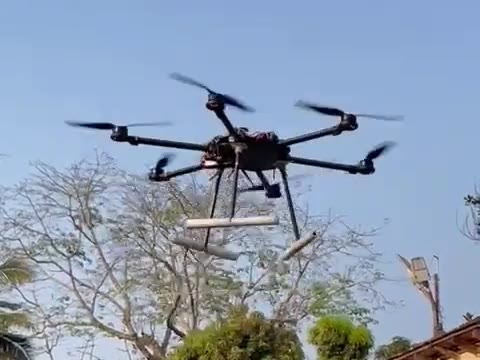
The result
2nd
SUAS 2023, Maryland
Planning and navigation software for an autonomous drone that placed 2nd at the Student Unmanned Aerial Systems (SUAS) Competition 2023.
How it started
Each year, Project MANAS builds an autonomous drone for the Student Unmanned Aerial Systems (SUAS) Competition.
For 2023, the competition made major changes to its mission requirements. The drone's software was written for the 2022 format and failed to adapt to the new standards.
The old system
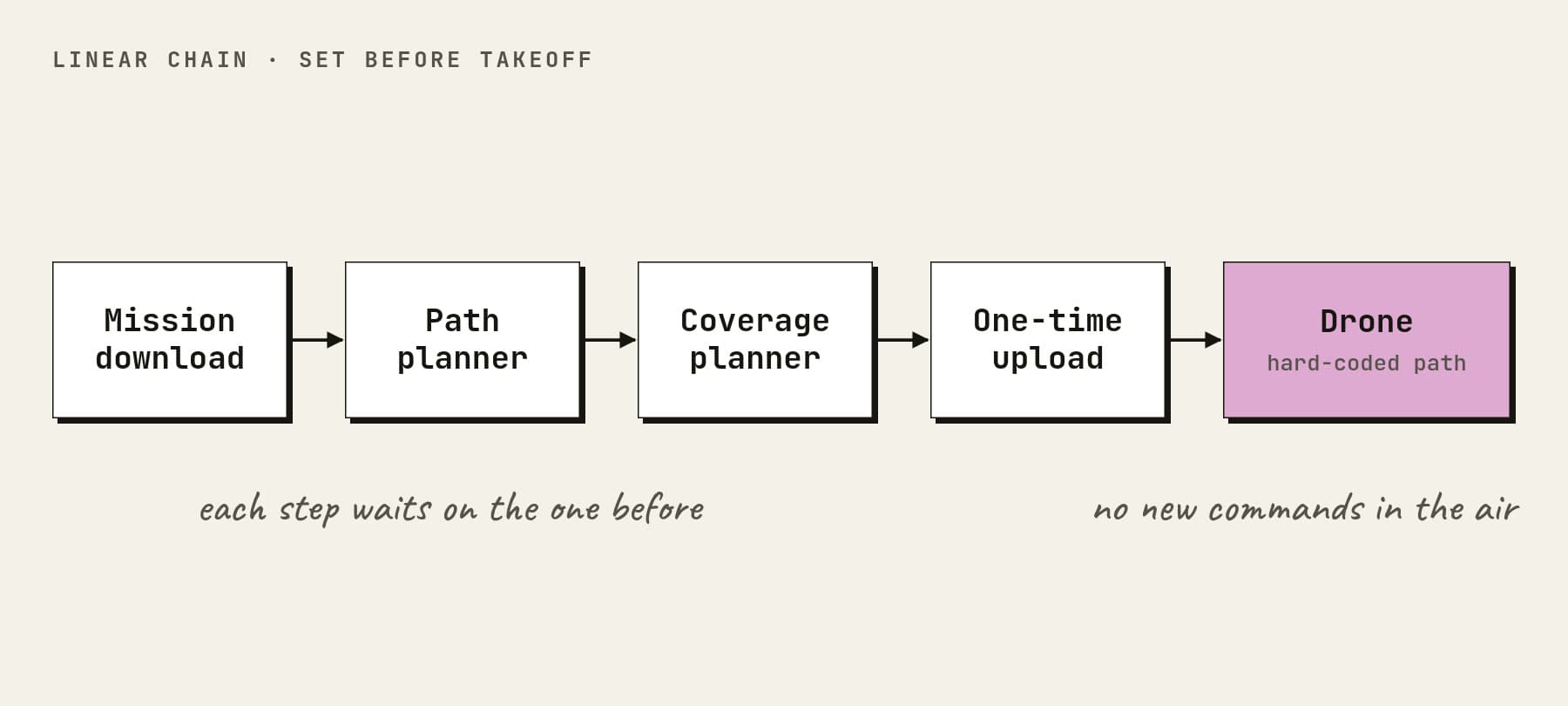
The navigation planner was built under a tight deadline for the 2022 format, and it had multiple issues. It crashed often, and could not replan mid-flight or take new commands in the air. Its linear design meant every step had to be set before takeoff, in a fixed sequence.
A mechanically complex drone was held back by its software, which made progress on the platform close to impossible.
What got built
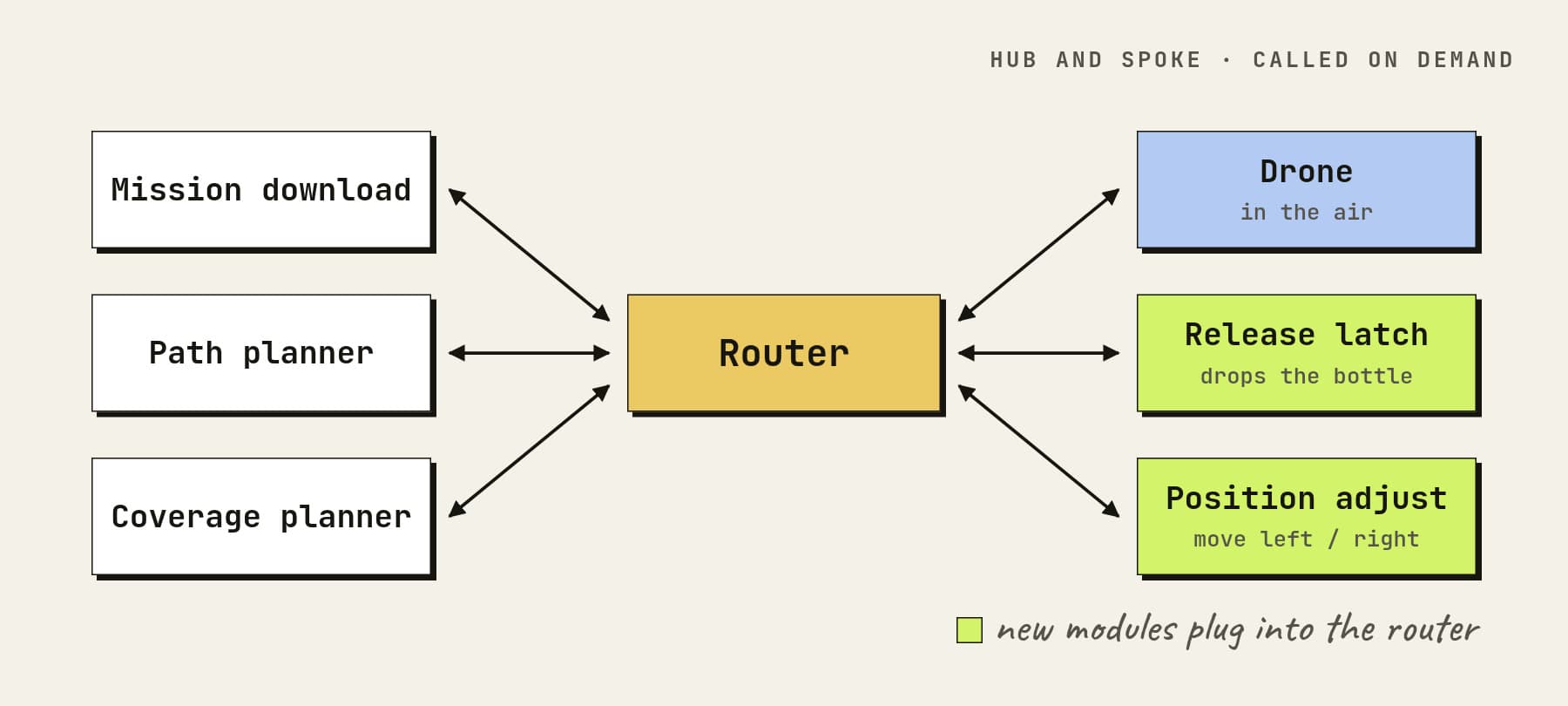
The planner was redesigned from scratch. The linear chain was swapped for a hub-and-spoke design, built around a central router.
In the old design, each step was its own component, but they were forced to run in a fixed line. Everything was uploaded to the drone once, as hard-coded instructions.
The router takes in the mission the same way, then calls each component on demand. New modules could be plugged straight into it. This made the design more flexible and easier to work on.
Hitting the target
Due to a small expected error in an upstream component, the drone would always be a few meters off the drop location. That was not precise enough for a successful drop.
This is where the new design let us plug in a human-in-the-loop component. An operator tapped the target on the live video feed, and the component sent correction commands that lined the drone up perfectly over the drop location.
Result
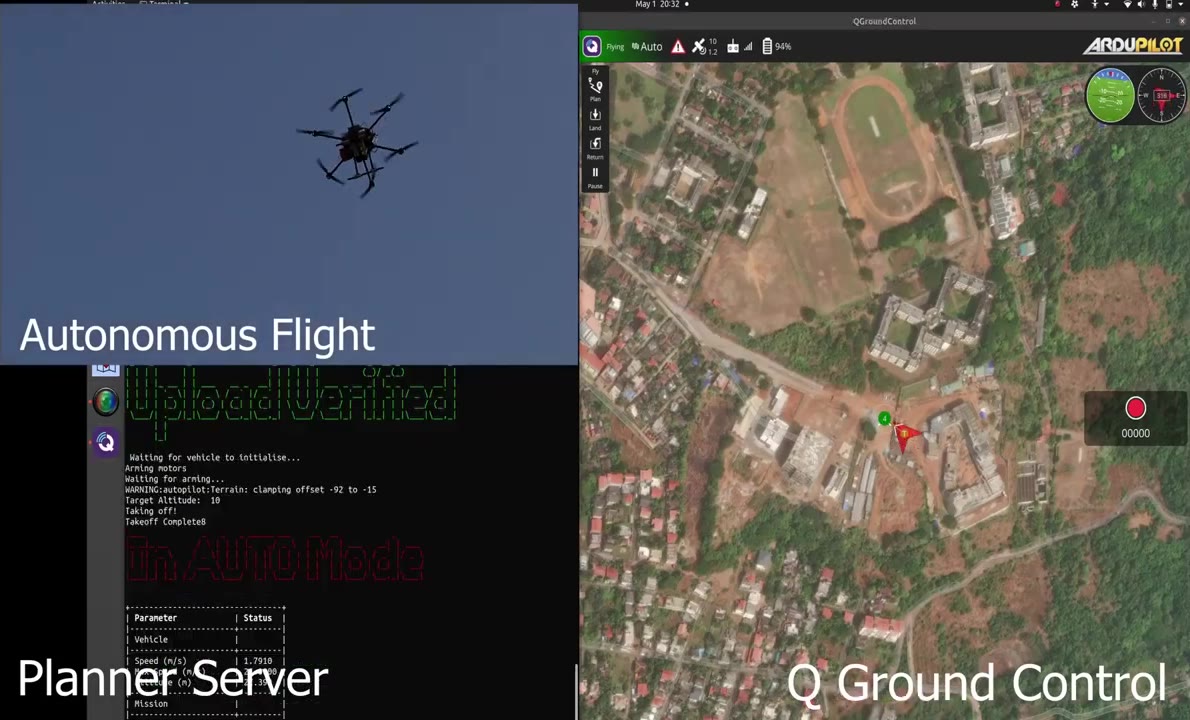
After 100 to 200 test flights, the system was reliable enough to compete.
The team placed 2nd at SUAS 2023 in Maryland, USA.
I learned…
how to build a system that adapts when the task changes.